
What is AC Joint Arthroplasty?
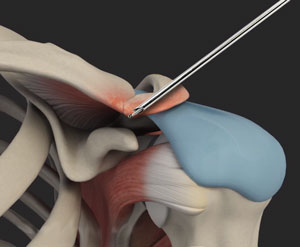
Acromioclavicular (AC) joint arthroplasty, also known as the Mumford procedure or distal clavicle resection, is a surgical procedure performed to mainly treat osteoarthritis of the AC joint or AC joint arthrosis. The procedure involves removal of less than a centimeter of the end of the clavicle nearest to the acromion along with some reshaping of the AC joint to enable pain-free motion of the joint.
Osteoarthritis of the AC joint is a degenerative joint condition defined by loss of cartilage or wear and tear of the smooth, white articular cartilage covering the ends of bones that enable smooth movement of the bones and joints without friction. Wear and tear of the AC joint can occur over time as you age or with repetitive stress activities that affect the AC joint. It is more common in individuals involved in overhead sports activities such as tennis; construction workers; weight lifters; and gym enthusiasts who engage in excessive bench presses and military presses.
What is the Anatomy of the AC Joint?
The AC joint is situated at the end of the shoulder where the scapula (shoulder blade) and clavicle (collarbone) join together at a position on the upper section of the scapula called the acromion. The scapula and clavicle bones are held together by ligaments. The joint is enveloped by a group of ligaments called acromioclavicular ligaments to design a capsule that encloses the joint. The shoulder is stabilized by another group of ligaments termed as the coracoclavicular ligaments that hold the clavicle in position by joining it to a bony projection on the surface of the clavicle known as the coracoid process. The joint has a plate of cartilage between 2 bones that help in joint movement. The AC joint enables motion to occur between the scapula and the clavicle as you move your shoulder.
What are the Indications for AC Joint Arthroplasty?
Some of the common indications for AC joint arthroplasty include:
- Symptomatic AC joint osteoarthritis
- Impingement of the rotator cuff secondary to arthritic or degenerative changes in the AC joint, such as bone spurs triggering secondary impingement
- AC joint osteolysis or distal clavicular osteolysis, also known as weightlifter’s shoulder; a condition marked by a series of tiny fractures down the end of the clavicle
- Symptoms that interfere with your daily activities, work, and sports and are not responsive to conservative treatment measures for a minimum of six months
What is the Procedure for AC Joint Arthroplasty?
Surgery may be performed by a minimally invasive technique using an arthroscope or an open method under regional or general anesthesia. It usually involves the removal of half an inch of bone at the outer end of the clavicle (resection arthroplasty) to prevent the bones in the joint from rubbing against each other. Bone spurs are removed and any adjacent injuries to tendons or ligaments are also repaired during the procedure. After completing all the repairs, the surgical cut or keyhole incisions are closed with sutures and bandaged accordingly.
What Does Postoperative Care for AC Joint Arthroplasty Involve?
In general, postoperative care instructions and recovery after AC joint arthroplasty will involve the following steps:
- Post surgery, your arm is placed in a sling and your shoulder will be immobilized for a few weeks.
- You will be transferred to the recovery area to be monitored.
- Your nurse will monitor your blood oxygen level and other vital signs as you recover.
- You may notice some pain, swelling, and discomfort in the shoulder area. Pain and anti-inflammatory medications are provided as needed.
- Medications will also be prescribed as needed for symptoms associated with anesthesia, such as vomiting and nausea.
- Antibiotics are prescribed to address the risk of surgery-related infection.
- It is important to keep the surgical site clean and dry. Instructions on surgical site care and bathing will be provided.
- Refrain from smoking for a specific period of time as it can negatively affect the healing process.
- Eating a healthy diet rich in vitamin D is strongly advised to promote healing and a faster recovery.
- Refrain from overhead activities and lifting heavy weights for the first couple of months. Gradual increase in activities over a period of time is recommended.
- You will need to take off work for at least a week to rest and promote healing.
- You will not be able to drive until you are fully fit and able to hold a steering wheel comfortably in both arms.
- An individualized physiotherapy protocol will be designed to help strengthen your shoulder muscles and optimize shoulder function.
- You will be able to resume your normal activities in a couple of months; however, return to sports may take 4 to 6 months or longer.
- A periodic follow-up appointment will be scheduled to monitor your progress.
What are the Risks and Complications of AC Joint Arthroplasty?
AC joint arthroplasty is a relatively safe procedure; however, as with any surgery, some risks and complications may occur, such as:
- Infection
- Blood clots
- Injury to nerves and vessels
- Bleeding
- Swelling and pain
- Numbness and tingling
- Shoulder stiffness
- Anesthetic/allergic reaction
If you wish to be advised on the most appropriate treatment, please call to schedule an appointment or click to request an appointment online.